
The Moment You Notice It
It usually happens fast. Your kid chases the dog toward the garage just as you hit the remote, and for a half-second the door is coming down and nobody is moving out of the way. Or the dog darts underneath to grab a ball right as the door starts closing, and you realize you have no idea whether it would actually stop in time. Most people don't think about garage door safety until a moment like that stops them cold in their own driveway.
The good news is that the door almost always does stop or reverse. The bad news is that almost always is doing a lot of work in that sentence, and the gap between "almost always" and "every single time" is exactly where injuries happen.
What Actually Goes Wrong
A standard garage door weighs well over 100 pounds, and the springs that lift it store enormous tension. When safety systems work as designed, none of that matters. When they don't, here's what you're dealing with:
- Auto-reverse failure: Every door built since the mid-1990s is required to have a mechanism that reverses the door if it meets resistance. Springs weaken, sensors drift out of alignment, and photo-eye lenses get dirty — any of these can quietly disable the feature without an obvious warning sign.
- Photo-eye sensors blocked or misaligned: The two small sensor eyes near the bottom of the track are what detect a child, pet, or object in the door's path. Snow, salt spray, leaves, or a bumped bracket can knock them out of alignment just enough that they stop working, while the door still appears to operate normally for everything that isn't a 30-pound obstacle.
- Pinch points along the panel sections: Older doors, and some lower-cost replacement panels, don't have pinch-resistant designs. Little fingers exploring the seams between sections during the brief seconds the door is moving are a classic emergency room story.
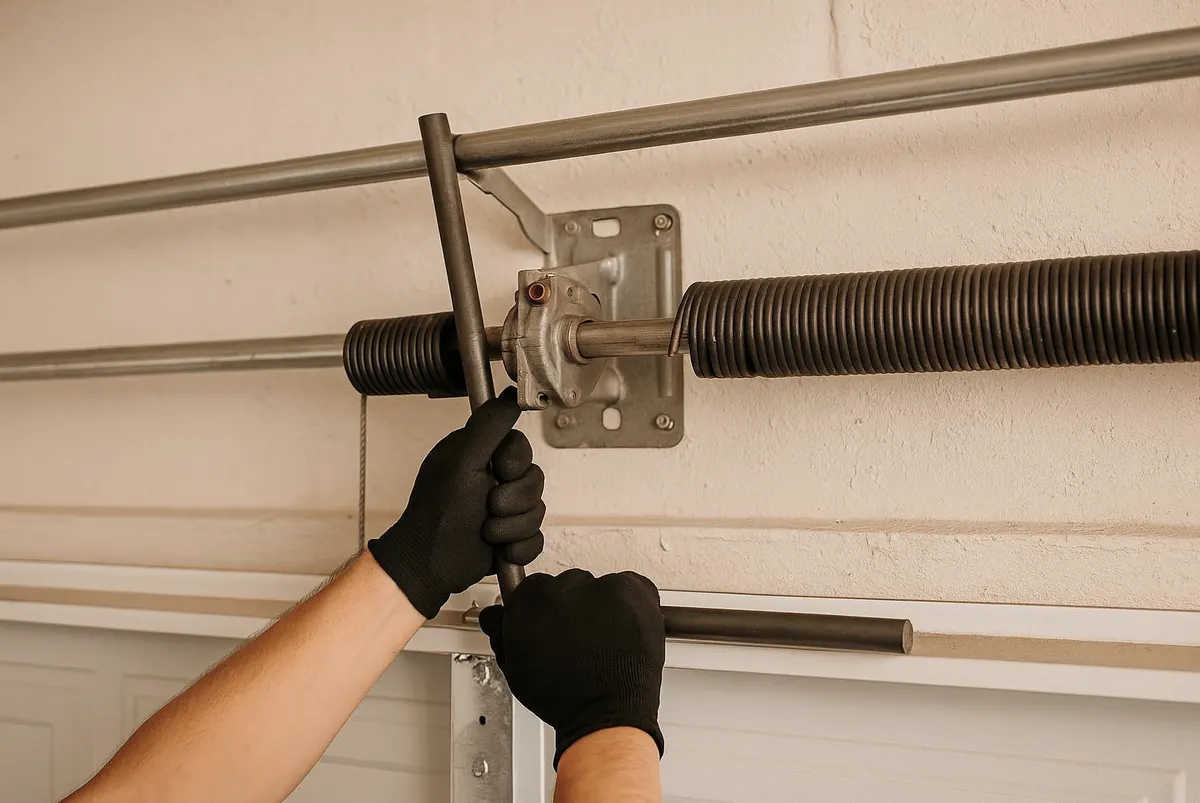
- Spring failure: A worn or improperly balanced spring can cause the door to drop suddenly instead of closing on its normal cycle, or to slam if the opener's force settings compensate incorrectly.
- Easy remote access: Clip-on remotes left on a stroller, a low garage shelf, or a kitchen counter at kid height turn the garage door into a toy. A small child pressing a button they don't understand is a leading cause of near-misses.
How badly these go is not abstract. Crushed fingers, broken bones, and in the worst documented cases around the country, fatal entrapments have all been linked to garage doors without working safety reversal. Pets are smaller and lower, which puts them directly in the door's path at exactly the height sensors are meant to cover — but only if those sensors are actually working.
The Specific Actions That Prevent It
None of this requires replacing your door. It requires a short, repeatable checklist:
- Run the resistance test monthly. Place a 2x4 or a roll of paper towels flat on the ground in the door's path and close it. The door should reverse immediately on contact. If it doesn't, stop using the opener until it's inspected.
- Check the photo-eye alignment. The two sensors near the bottom of each track should have small steady lights (the color varies by brand). If one is blinking or dark, wipe the lens and check that nothing has bumped the bracket. Heading into winter, salt spray kicked up from the driveway and road treatment can coat these lenses faster than people expect.
- Keep remotes and keypads out of reach. Store wall-mounted openers at adult height, use the keypad's code-lock feature if your model has one, and don't leave clip-on remotes in strollers, diaper bags, or the bottom of a toy bin.
- Teach a simple household rule. No one — kids or adults — stands, walks, or lets a pet pass under a moving door. It sounds obvious, but most incidents happen during the two or three seconds everyone assumes someone else is watching.
- Inspect panel seams if your door is older. If you can see daylight or a visible gap between sections as the door moves, it's worth having pinch-resistant panels evaluated, especially in a household with young kids who are at exactly the right height to reach those seams.
- Don't ignore a hard or sudden drop. If the door ever slams down faster than normal or drops partway before catching, treat that as a spring or cable issue, not a quirk. That's the kind of failure that doesn't give a warning the second time.
Why This Matters More Going Into an Ohio Winter
Cold snaps, ice, and road salt are hard on garage door hardware. Metal components contract in the cold, lubricant thickens, and salt spray tracked in on tires or boots accelerates sensor grime and rust on tracks and hinges. A door that reversed reliably in September can start behaving differently by December if it hasn't been checked. This is the season to get ahead of it, not react to it.
When to Call Dayton Garage Door
If your resistance test fails, a sensor light won't stay steady no matter how many times you clean it, or the door has ever dropped faster than it should, it's time to call. Our garage door maintenance service includes testing the auto-reverse system, checking photo-eye alignment, and inspecting spring tension and panel condition — the exact items on the list above, checked by someone who does it every day. If the issue turns out to be a worn or imbalanced spring, our spring replacement service handles that safely; this is not a DIY repair given the tension involved.
If you have kids or pets in the house and it's been a while since anyone looked at your garage door's safety systems, now is the time, before winter weather adds another variable. Call Dayton Garage Door to schedule an inspection anywhere in the Dayton, Kettering, Huber Heights, Beavercreek, Centerville, Fairborn, Trotwood, or Riverside area.